
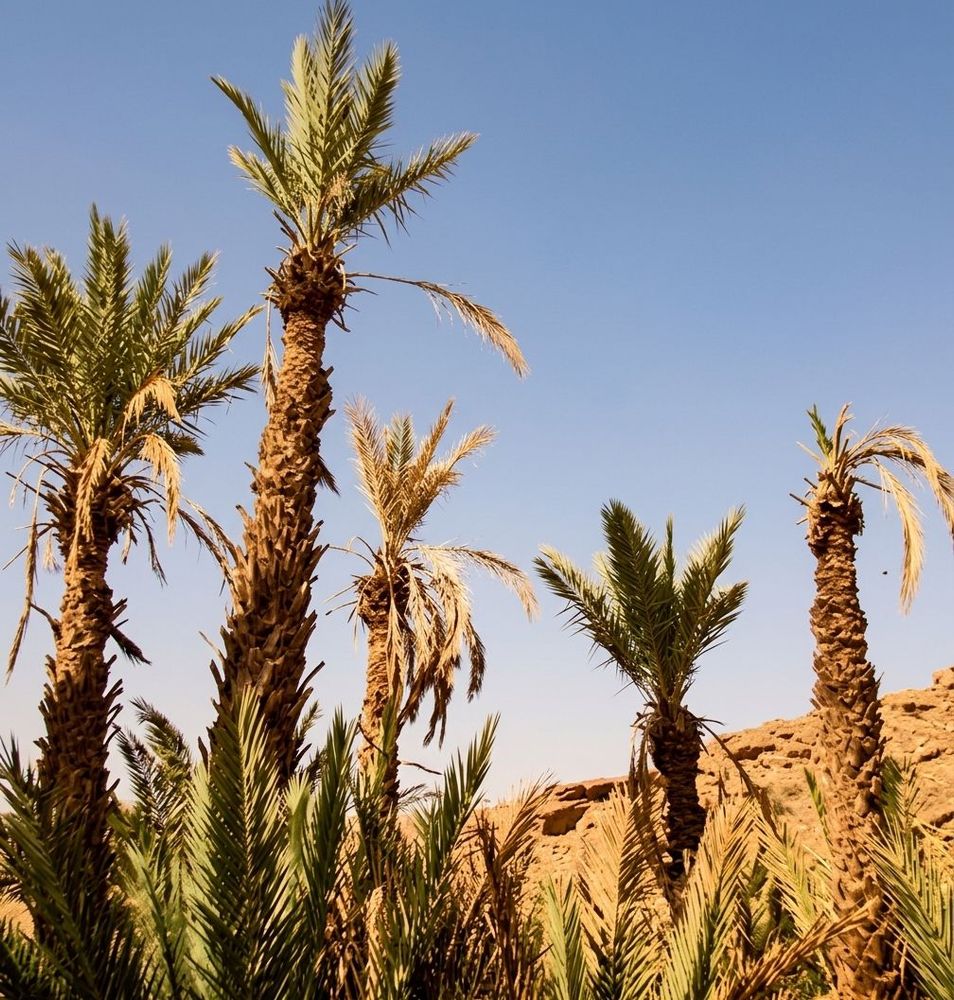
Date Palm Bayoud Disease (Fusarium oxysporum f. sp. albedinis): Scientific Overview and Protection Strategies
1. Historical Background and Taxonomy
A. Origin and Geographical Spread
Bayoud disease was first observed around 1890 in Morocco, within the Draâ Valley. In less than a century, the disease destroyed more than two-thirds of Moroccan date palms before spreading eastward into southwestern Algeria (Colomb-Béchar, Touat, Gourrara, Tidikelt, Metlili near Ghardaïa), threatening the Zibans basin (Biskra-Touggourt) as well as the Tunisian border. A similar fusarium wilt affecting date palms was also reported in Argentina in 1953.
B. Identification of the Causal Agent
Initial scientific investigations were conducted by Sergent and Beguet (1921), followed by Killian and Maire (1930). Malençon later formally identified and named the responsible parasite: Fusarium albedinis (now classified as Fusarium oxysporum f. sp. albedinis). Between 1950 and 1958, Pereau-Leroy focused on identifying naturally resistant cultivars.
2. Symptomatology and Pathogen Biology
A. External Symptoms and Disease Progression
- Middle Frond Infection: Initial symptoms appear on one or several fronds in the middle canopy.
- Unilateral Drying: Leaflets on one side of the rachis, followed by the other, successively fold along the spine and turn white (hence the name "Bayoud," derived from the Arabic word for white).
- Rachis Necrosis: A distinct brown necrotic stripe extends along the rachis from the base toward the tip.
- Canopy Invasion: The disease rapidly spreads to neighboring fronds. At an advanced stage, affected fronds hang down along the trunk, leaving only the young central fronds green.
- Tree Mortality: The entire palm eventually wilts and dies. The speed of decline ranges from a few months to several years, depending on climatic conditions and irrigation practices.
B. Internal Symptoms and Infection Mechanism
Penetration Path: The fungus enters through the roots, invades the vascular system, and gradually moves upward with the sap flow to the terminal bud and fronds. Cross and longitudinal sections of the trunk reveal a characteristic reddish-brown discoloration within colonized vascular bundles.
Soil Survival: Fusarium oxysporum f. sp. albedinis can survive in the soil for several years even in the absence of date palms. It can also persist on the roots of secondary host plants such as henna or alfalfa.
3. Molecular Characterization and Early Diagnosis
Genetic Identification (PCR): Specific molecular markers (PCR and qPCR assays) allow early detection of the fungus in soil, roots, or offshoots long before visual symptoms appear.
Strain Typing: The population of F. oxysporum f. sp. albedinis exhibits very low genetic diversity (clonal strain), facilitating high diagnostic accuracy and targeted management.
4. Varietal Selection and Biotechnology
High-Performing Resistant Varieties: Breeding and selection programs have identified cultivars that possess natural resistance while maintaining high fruit quality (e.g., Najda, Takerboucht, Sair Layalat).
In Vitro Culture (Micropropagation): Organogenesis and somatic embryogenesis enable large-scale propagation of healthy, certified resistant plantlets, ensuring the sustainable rehabilitation of affected oases.
5. Biocontrol and Biological Management
| Mechanism / Agent | Mode of Action | Examples |
|---|---|---|
| Antagonistic Bacteria | Inhibits F. oxysporum growth through competition and antibiosis. | Pseudomonas fluorescens, Bacillus subtilis, Bacillus amyloliquefaciens |
| Antagonistic Fungi | Occupies ecological niches in the root zone to block infection. | Trichoderma harzianum, Trichoderma atroviride |
| Defense Inducers (Elicitors) | Stimulates plant immune pathways (phytoalexin accumulation, cell wall lignification). | Chitosan, Potassium phosphites |
6. Integrated Soil Management and Biofumigation
- Soil Solarization: Covering moist soil with transparent plastic sheets during hot summer months to significantly reduce soil fungal load.
- Biofumigation: Incorporating organic matter rich in glucosinolates (such as brassica residues) that release volatile compounds toxic to Fusarium chlamydospores upon decomposition.
- Quarantine Measures: Strict enforcement of regulations prohibiting the movement of uncertified offshoots or plant tissue from infested areas into healthy oases.
Protect Our Date Palm Heritage!
Combating Bayoud disease requires continuous vigilance. By combining strict quarantine controls, certified resistant micropropagated plants, and modern soil biological control methods, we can safeguard date palm ecosystems and the oasis economy for generations to come.