1. A Millennial History: Prosperity, Decline, and Renaissance
Roman Prosperity
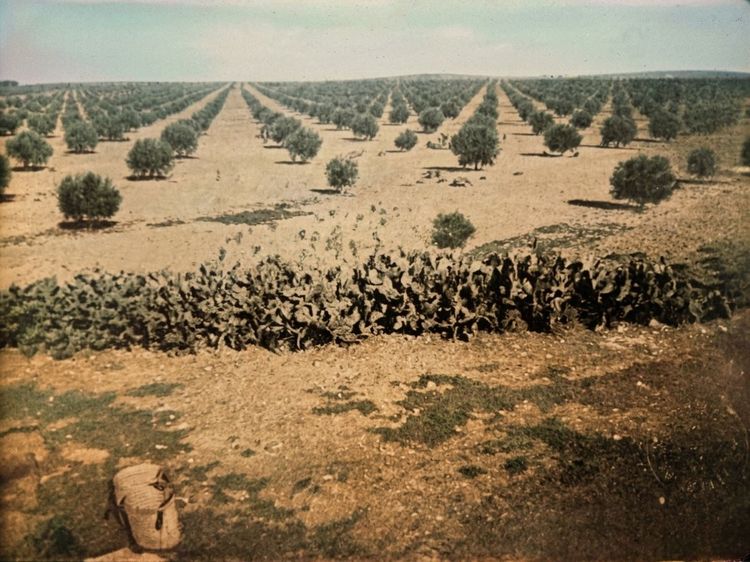
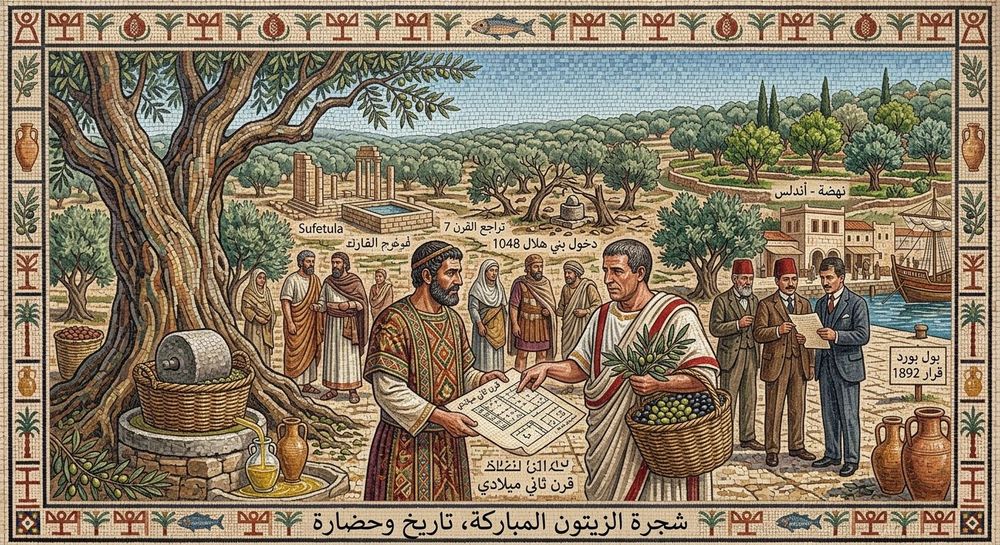
Since Roman times, olive cultivation experienced remarkable expansion in Central and Southern Tunisia. The ancient cities of Sbeïtla, Kasserine, and Thélepte, alongside numerous remains of oil mills and cisterns, bear witness to the vast extent of these ancient groves. The intensification of plantings toward the end of the 2nd century AD brilliantly responded to the arid climate.
Periods of Decline and Historical Accounts
The decline of olive growing began in the 7th century and intensified during the Hilalian invasions in 1048. Renowned Arab historians Ibn Khaldoun (ابن خلدون) and El Kairouani (ابن أبي دينار القيرواني) documented in their writings the massive destruction inflicted upon the Tunisian olive forest, as well as the demolition of oil mills and dwellings. Nevertheless, a few olive groves survived in the Sahel and Djerba. Thanks to its unique ability to sprout vigorous shoots from its stump, the tree managed to endure through the centuries.
Renaissance and Modern Expansion
- The Moorish Contribution (17th Century): Expelled from Spain and welcomed in Tunisia, they established most of the northern groves, remnants of which still stand from Cap Bon to Bizerte and Testour. By 1880, Tunisia accounted for approximately 8.1 million olive trees across 170,000 hectares.
- The 1892 Boom: The decree of February 8, 1892 (spearheaded by Paul Bourde) allocated state lands around Sfax, propelling the Tunisian olive orchard beyond 16 million trees over more than 370,000 hectares by 1930, progressively connecting the Sfax forest to those of the Sahel, Cap Bon, and the North.
2. Climatic Requirements and Soil Analysis (Pedology)
The coastal climate, rich in atmospheric moisture, is naturally ideal for olive trees, whereas continental climates require adequate rainfall. In the South, under rainfed farming, profitability collapses if annual rainfall drops below 160 mm.
Golden Rules of Soil Management
Olive trees tolerate a wide range of soils but suffer in overly compact ground.
- Low Rainfall Zones (160 to 300 mm): Sandy or light silico-calcareous soils are essential. Planting olive trees in heavy, compact clay soils must be strictly avoided. In the Sahel (300 mm rainfall), soil containing over 15% clay is deemed poor. In the Center (290 mm rainfall), calcareous soil becomes unfavorable if clay content exceeds 18 to 20%.
- Natural Indicator: Field wormwood (Artemisia campestris or الشيح) is the wild plant that best characterizes prime olive land in the Center and South.
- Recommendation: A physical soil analysis is strongly recommended before establishing any new orchard.
3. Classification and Selection of Tunisian Cultivars
Tunisia is home to over a hundred traditional cultivars, categorized into two main groups:
A. Table Olives (Octoubri)
Sought after for their firm flesh, large size, and small, non-adherent stone.
- Meski: The benchmark table olive variety in Tunisia.
- Besbessi & Bidh El Hamam: Traditional varieties from the North and Tunis region.
- Barouni, Zarazi, Marsalina, Nab Djemel, Gordhane.
B. Oil Olives
Prized for their productivity and high oil content (ranging from 18% to 35%).
| Cultivar | Main Region | Characteristics & Profile |
|---|---|---|
| Chemlali Sfax | Sfax, Sahel, Center | Small fruit, exceptionally high oil yield, outstanding drought tolerance. |
| Chétoui (Chaïbi) | Northern Tunisia | Medium fruit, intensely fruity oil rich in polyphenols (appreciated bitterness). |
| Other Local Cultivars | Ousseltia, Djerba, South | Ouslati, Zalmati, Southern Zarazi, Saïali, Yacouti. |
Invest in the Future of Your Orchard and Land!
Understanding the history of your olive grove and selecting the appropriate soil and variety are the cornerstones of successful olive farming. By wisely choosing your trees according to your terroir and regional climate, you ensure strong and sustainable yields while contributing to the growth of Tunisian agriculture and the global prestige of our heritage olive oil.