Climate Change Impact on Almond Trees: From Winter Dormancy to Yield — Focus on Mazetto & Lauranne
Almond trees (Prunus dulcis) are well known for their tolerance to drought and heat. However, recent climate shifts—such as rising temperatures, mild hivers, heatwaves, and rainfall deficits—severely disrupt their biological cycle, from bud formation to fruit filling, particularly for varieties with specific climatic needs such as Mazetto and Lauranne.
1. Winter Dormancy: Understanding the Physiological Disruption
Entering winter rest follows strict physiological rules:
- Summer & Autumn: Floral bud differentiation and accumulation of nutrient reserves (starch, nitrogen) in shoots and roots to power early spring growth.
- Winter (Endodormancy): The tree requires a sufficient accumulation of chilling hours to break dormancy evenly. Overly warm winters prevent trees from satisfying these chill requirements.
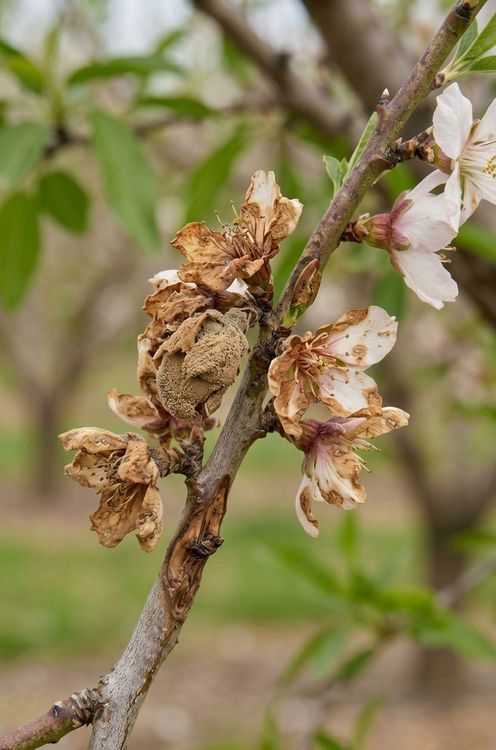
- Result: Uneven flowering, poor pollination, and reduced fruit set, directly impairing yield stability over seasons.
2. Varietal Challenges: Behavior of Mazetto and Lauranne
Climatic responses differ significantly by cultivar:
- Mazetto Cultivar: Studies in warm Mediterranean regions (such as Sfax) show specific chilling and heat requirements. Regular field observation remains essential to assess its actual adaptation.
- Lauranne Cultivar: Requires close monitoring of bud swell timing, flowering rate, fruit set, and post-stress fruit drop.
Grower's Tip: If growing both varieties in the same orchard, record their phenology over 3 to 5 seasons to separate genetic factors from soil and management influences.
3. Water Stress, Sirocco Winds, and Kernel Filling
Climate pressure extends well into spring and summer:
- Resource Competition: Following fruit set, competition for water and nutrients escalates between vegetative growth and developing kernels.
- Sirocco Impact: Hot, dry air forces stomatal closure, suppressing photosynthesis and slowing kernel development. The tree survives, but economical yield drops.
4. Field Management Strategies in Semi-Arid Zones (e.g., Sidi Bouzid)
- Smart Irrigation Management: Monitor soil moisture at different depths rather than waiting for wilting symptoms. Direct irrigation to sensitive phenological stages.
- Canopy & Leaf Protection: Healthy leaves drive photosynthetic energy and reserve storage for the next season. Avoid excessive pruning or early defoliation.
- Variety Phenology Logs: Record bloom dates, fruit set percentage, and yields to identify cultivars with the most stable performance.
Conclusion
Climate change is not a reversible parameter: the plant is strongly and inextricably coupled with its surrounding climate. Faced with this biological reality, sustaining yields for cultivars like Mazetto and Lauranne requires adapting agronomic practices—irrigation scheduling, balanced nutrition, and phenological monitoring—to support trees under irreversible climatic constraints.